Silver plated or solid silver? How to tell the difference
Silver plated means a layer of silver a few micrometres thick on a base metal, usually nickel silver or brass. Solid silver is silver all the way through, with a fineness of 800 to 925 thousandths. On the outside they look alike; in value the difference is easily a factor of a hundred.
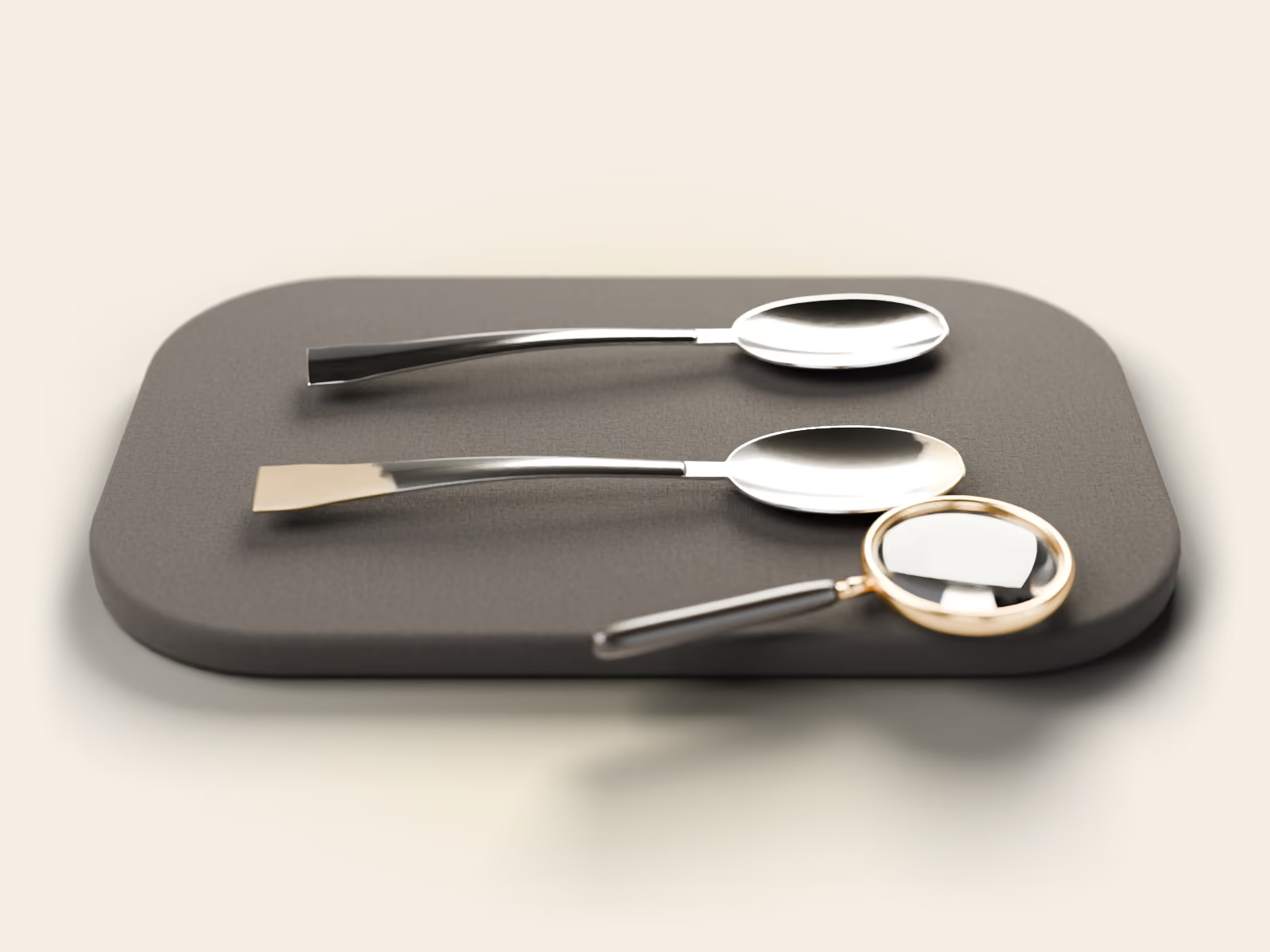
The quickest difference: the mark
Solid silver carries a fineness mark. Plated ware carries something else:
- Solid silver – 925, 835, 800, STERLING, a Dutch lion or sword, a French Minerva head.
- EPNS – electroplated nickel silver: plated nickel silver.
- EPBM – electroplated britannia metal: plated tin alloy.
- 90, 100, 120 – the silver layer in grams per twelve place settings. A thickness, not a fineness.
- A1, AI, silver plate, plaqué argent, métal argenté – silver plated.
- Alpacca, nickel silver, German silver, maillechort – copper, nickel and zinc. It contains no silver.
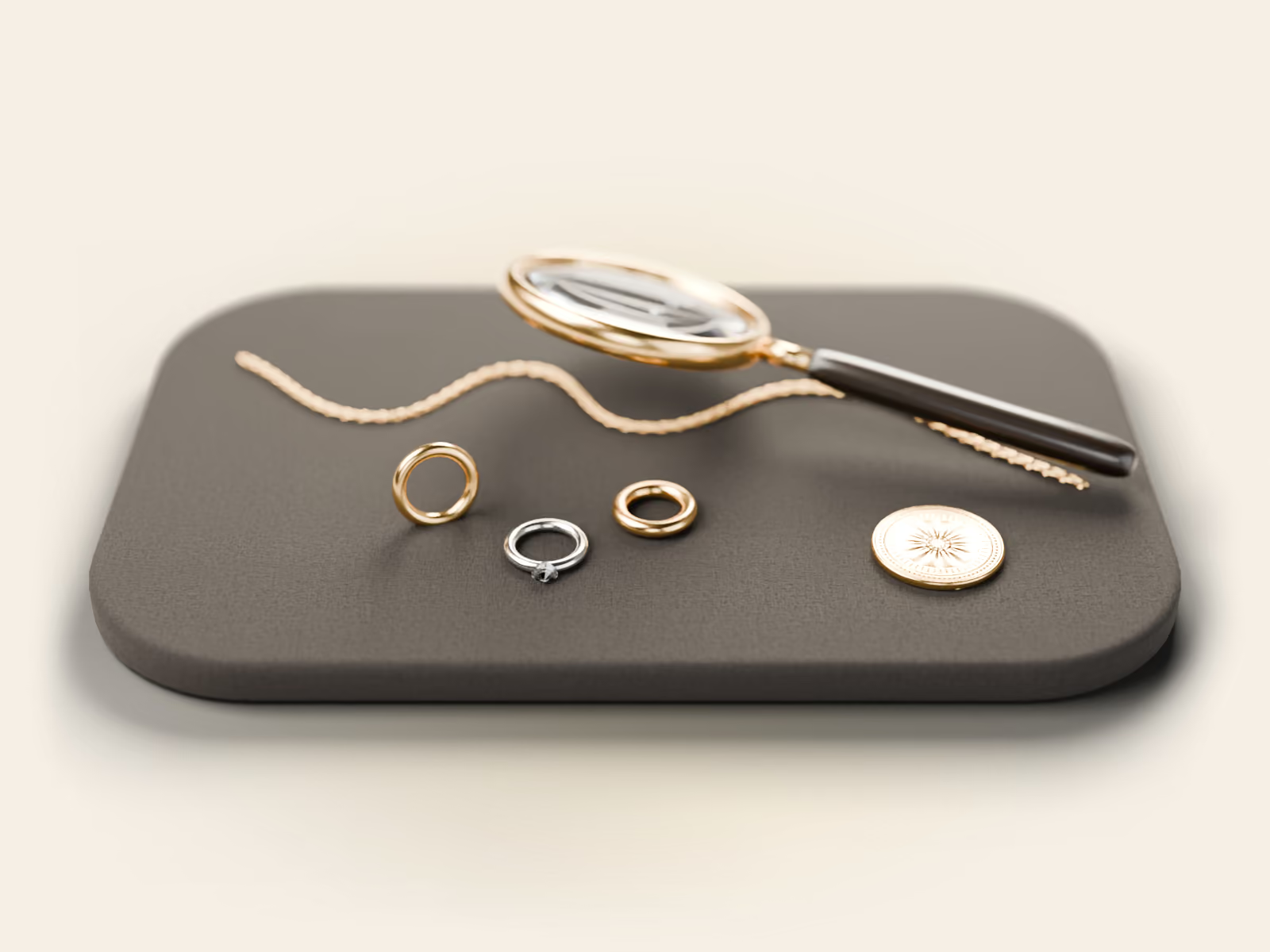
Recognising it without a mark
If the mark has worn away or was never applied, look at worn spots. On the bowl of a spoon or the rim of a dish, plated ware often shows a yellowish or grey core. Solid silver does not wear through to another colour.
Home tests for silver are of limited help: plated ware also leaves a black smear on a cloth. Certainty comes from a measurement.
Is silver-plated cutlery worth anything?
As silver: no. The silver layer of a complete plated cutlery set often weighs no more than 90 to 120 grams, spread over dozens of pieces, and cannot be separated profitably. We therefore do not buy plated ware, and we say so straight away.
As usable objects or branded pieces: sometimes. A complete set by a well-known maker in a canteen may still fetch something at auction or on a second-hand site. That is trade value, set by the buyer of the object, not by the silver price.
The difference in figures. A solid silver cutlery set of 2 kilos in 835 contains 1.67 kilos of pure silver. The same set in plate carries roughly a tenth of a kilo of silver as a layer, and nobody recovers that: as silver it therefore yields nothing.
What is silver
If your cutlery or dish carries a fineness mark, we buy it on weight and fineness. With cutlery, the knives are weighed separately because their handles are often filled.
- Selling a gold watch: gold value or watch value?With a gold watch from a lesser-known brand the gold is often the price; with a sought-after brand it is the watch. How to tell which applies to yours, and how much of the weight is actually gold.Read on
- Real or fake Rolex? Serial number, year of manufacture and the tell-tale signsWhere to find the serial and reference numbers, what they tell you about the year and the version, and which signs you can check yourself. Plus why certainty only comes once the case is open.Read on
- Selling gold at home: how to recognise a genuine valuerA buyer who rings your doorbell unannounced is not a valuer. Six signs of a trustworthy home visit, and what to do if something is not right.Read on
Questions about silver plated or solid silver
Is silver-plated cutlery worth anything?
Not as silver: the silver layer is a few micrometres thick and cannot be separated profitably, which is why we do not buy silver-plated cutlery. A fully plated set often carries no more than 90 to 120 grams of silver, spread over dozens of pieces. By comparison, a solid silver set of 2 kilos in 835 contains 1.67 kilos of pure silver. As a complete branded service by a known maker, ideally in its case, plated cutlery may still fetch something at auction or on a second-hand site. That is trade value, set by whoever buys the object, not by the silver price.
What does 90 on cutlery mean?
90 means that 90 grams of silver were used to plate twelve place settings: the cutlery is silver plated, not solid. The figure is a layer thickness and not a fineness, and the same goes for 100 and 120. Other marks for plated ware are A1, EPNS and silver plate. A fineness mark on solid silver looks different: 925, 835 or 800, a Dutch lion or sword, or a French Minerva head. Because the silver layer cannot be separated profitably, we do not buy cutlery marked 90; as a complete branded service it may still fetch something at auction.
What does EPNS mean?
EPNS stands for electroplated nickel silver: nickel silver with an electroplated layer of silver a few micrometres thick. So it is plated ware, and nickel silver itself contains no silver but copper, nickel and zinc. A related mark is EPBM, electroplated britannia metal: a silver-plated tin alloy. On worn spots, such as the bowl of a spoon, a yellowish or grey core often shows through on such pieces. Because the silver layer cannot be separated profitably, we do not buy EPNS as silver. If a piece carries 925, 835 or 800 instead, it is solid and we buy it on weight and fineness.
Is nickel silver real silver?
No, despite its name, nickel silver contains no silver: it is an alloy of copper, nickel and zinc, also known as alpacca, German silver or, in French, maillechort. The name and the silvery colour are misleading, and nickel silver often serves as the core of silver-plated cutlery, which is then marked EPNS. A magnet will not help you identify it, because nickel silver, like silver, is not magnetic. The mark tells you more: solid silver carries a fineness such as 925, 835 or 800, and if it says Alpacca or nickel silver, you know enough. As a precious metal nickel silver has no value, and we do not buy it.
Is your question not listed? Ask it below, call 085 060 3009 or go to contact.
Still something unclear?
Ask it here. You will receive a personal reply by email, usually within one working day – no automated message and no phone call you did not ask for.
- An answer from a valuer, not from a template
- We keep your question so that you need not repeat anything
- No sales pitch afterwards
Sources
Where you can verify what you have just read.
- LBMAThe London gold and silver price our daily rate is built on
- WaarborgHollandThe Dutch assay office that verifies fineness and strikes hallmarks
Rather just have it looked at?
A valuation is free and without obligation, at a location near you.