14 vs 18 carat gold: colour, strength and value
The difference between 14 and 18 carat is the gold content: 14 carat (585) is 58.5 per cent gold, 18 carat (750) is 75 per cent gold. 18 carat therefore contains 28 per cent more gold per gram. You see it in the colour, feel it in the weight and notice it in the value when you sell.
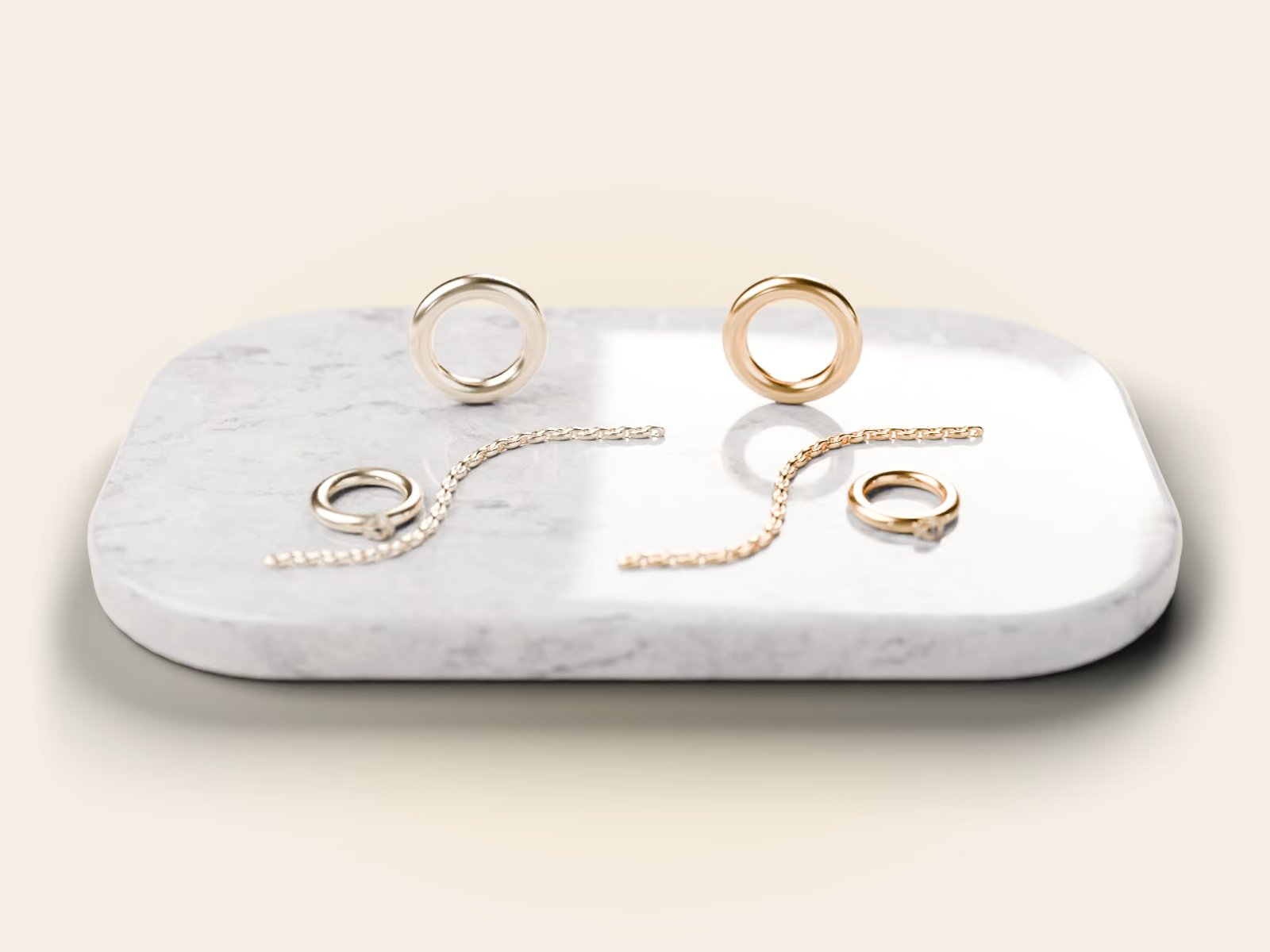
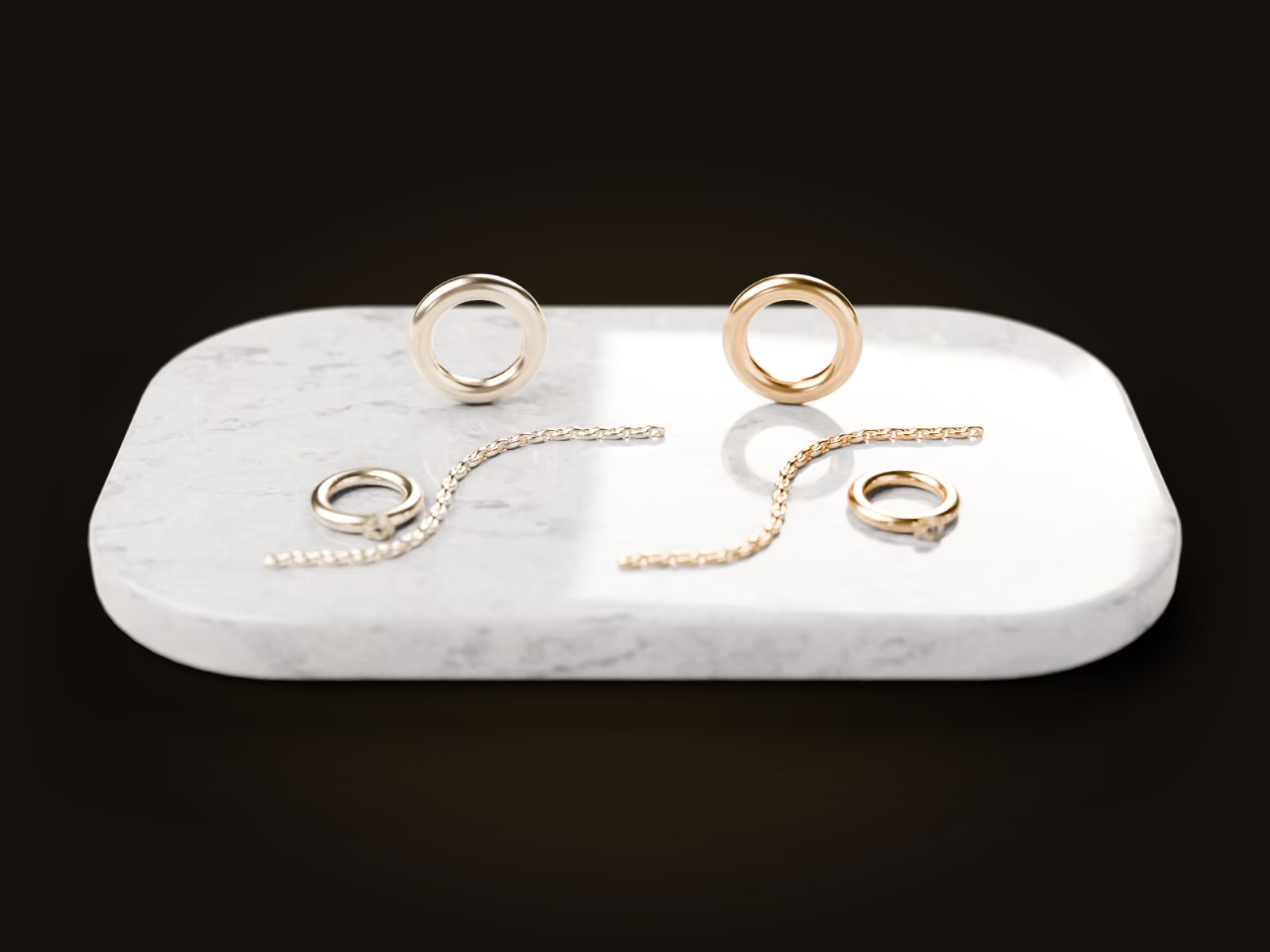
14 and 18 carat side by side
- Gold content – 14 carat: 58.5 per cent. 18 carat: 75 per cent.
- Hallmark – 14 carat: 585 or 14K. 18 carat: 750 or 18K.
- Colour (yellow gold) – 14 carat: lighter, slightly cooler yellow. 18 carat: deeper, warmer yellow.
- Hardness – 14 carat: harder and more scratch-resistant. 18 carat: softer, wears faster with daily use.
- Weight – in the same shape 18 carat is heavier, roughly 15 to 20 per cent.
- Common in – 14 carat: the Netherlands, Germany, Scandinavia. 18 carat: Belgium, France, Italy, watches.
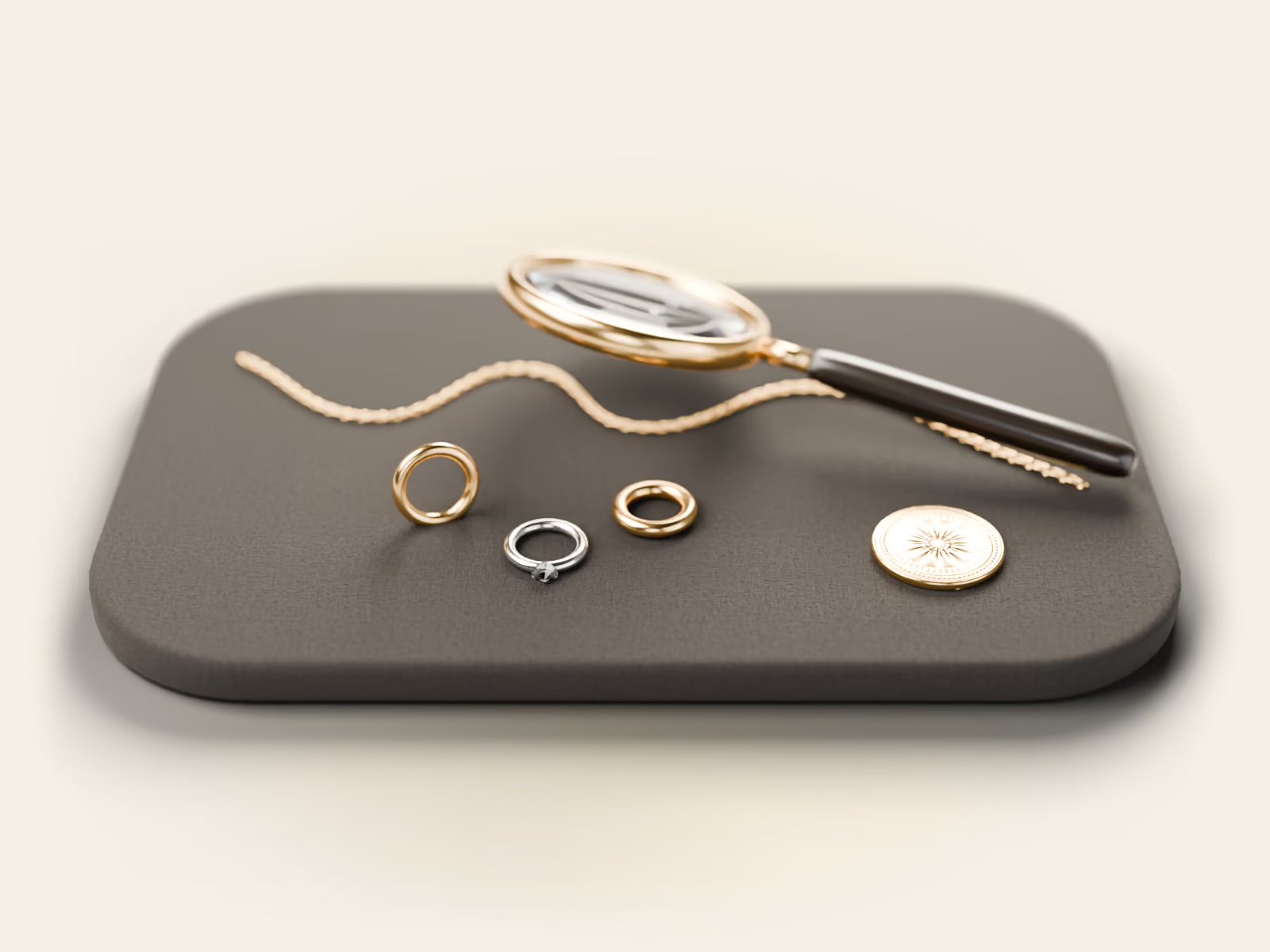
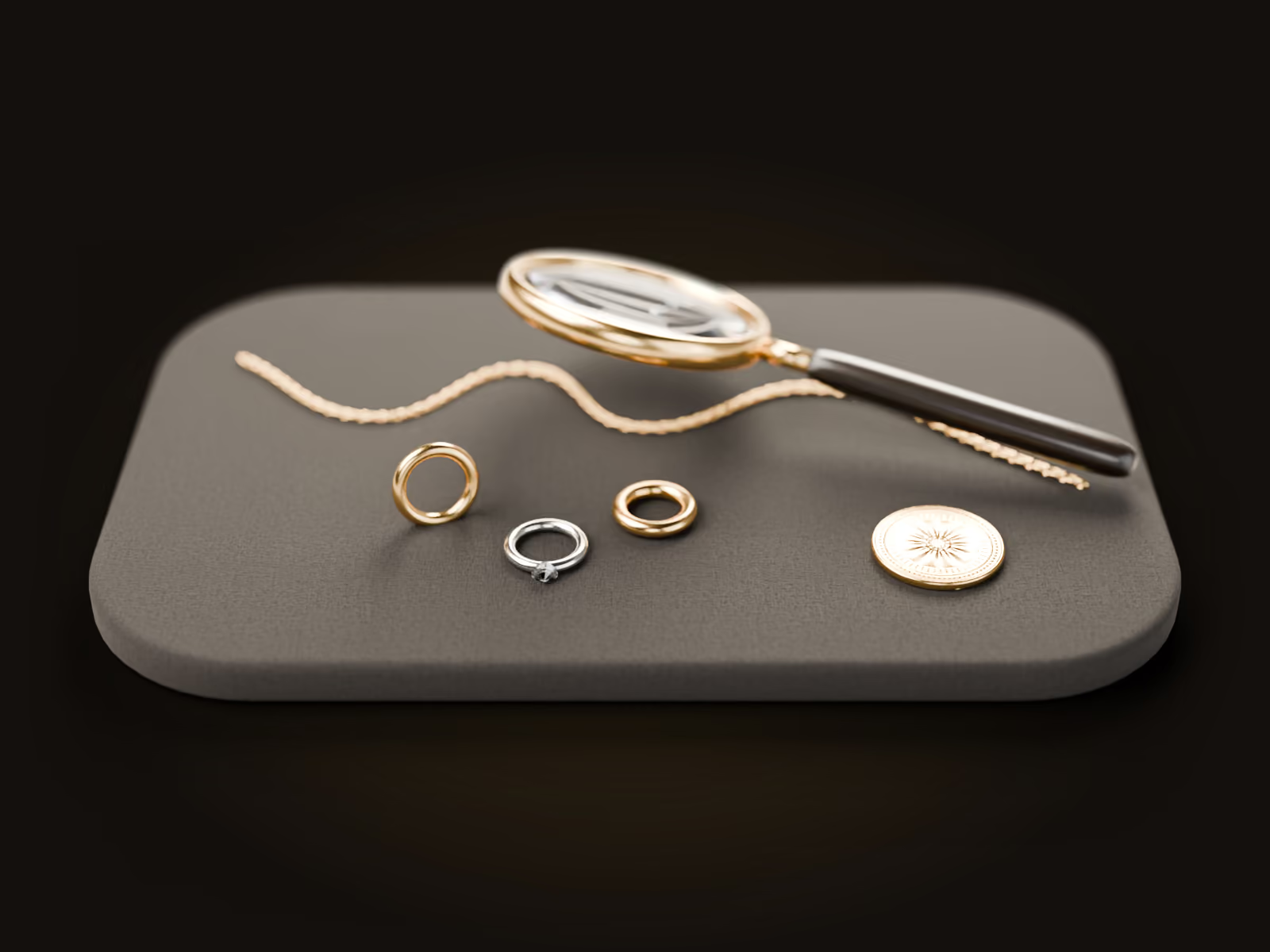
Colour: why 18 carat is more yellow
Gold itself is a deep yellow. The more other metal is added, the paler the alloy. In 14 carat, over 40 per cent is silver and copper, which visibly mutes the colour. Put a 585 ring and a 750 ring side by side and you will usually see it straight away.
With white gold the difference disappears: a layer of rhodium determines the colour. With rose gold, the amount of copper sets the tint, not the carat.
Strength and comfort
Pure gold is soft. The added metals make it harder, so 14 carat resists scratches and dents better than 18 carat. For a ring worn every day during manual work, that is a practical argument.
On the other hand, 14 carat contains more other metals. Anyone sensitive to nickel may react sooner to 14 carat white gold; nickel-free white gold with palladium also exists.
Value: what 14 and 18 carat yield per gram
When you sell, only the gold counts. The ratio is fixed: 750 divided by 585 is 1.28. At the same weight, 18 carat therefore yields 28 per cent more than 14 carat.
- 10-gram ring, 14 carat – 10 × 0.585 = 5.85 grams of pure gold.
- 10-gram ring, 18 carat – 10 × 0.75 = 7.5 grams of pure gold.
Not sure which carat you have? Look at the hallmark: 585 or 14K means 14 carat, 750 or 18K means 18 carat. We always check it with a measurement during the valuation.
Which is better, 14 or 18 carat?
There is no better, only a better choice for a purpose. Choose 14 carat for durability, a lower price and everyday wear. Choose 18 carat for the richer colour, less risk of allergy with yellow gold and more gold per gram.
If you are selling, the sum is simple: weight times fineness times price. Our current prices for both finenesses are on our prices page.
- Selling a gold watch: gold value or watch value?With a gold watch from a lesser-known brand the gold is often the price; with a sought-after brand it is the watch. How to tell which applies to yours, and how much of the weight is actually gold.Read on
- Real or fake Rolex? Serial number, year of manufacture and the tell-tale signsWhere to find the serial and reference numbers, what they tell you about the year and the version, and which signs you can check yourself. Plus why certainty only comes once the case is open.Read on
- Selling gold at home: how to recognise a genuine valuerA buyer who rings your doorbell unannounced is not a valuer. Six signs of a trustworthy home visit, and what to do if something is not right.Read on
Questions about 14 vs 18 carat gold: colour, strength and value
What is the difference between 14 and 18 carat gold?
The difference lies in the gold content: 14 carat (mark 585) contains 58.5 per cent pure gold, 18 carat (mark 750) 75 per cent. As a result 18 carat is a deeper, warmer yellow, roughly 15 to 20 per cent heavier for the same shape and worth 28 per cent more per gram. 14 carat contains over 40 per cent silver and copper, which makes it harder and more scratch-resistant, something that matters for a ring you wear every day. With white gold the colour difference disappears, because a thin rhodium layer determines the colour. In the Netherlands 14 carat is the most worn, in Belgium 18 carat.
How much more is 18 carat worth than 14 carat?
Per gram, 18 carat is worth 28 per cent more than 14 carat, because it contains 28 per cent more pure gold: 750 divided by 585 is 1.28. A 10-gram ring in 14 carat contains 5.85 grams of pure gold, the same ring in 18 carat 7.5 grams. The material value differs in exactly that ratio, because only the gold counts when you sell. For the same shape, an 18 carat piece is also roughly 15 to 20 per cent heavier, so the difference per item can be even greater. If you are unsure which carat you have, look at the mark; at the valuation we always measure the fineness ourselves.
Is 14 carat stronger than 18 carat?
Yes, 14 carat is harder and less prone to scratches and dents than 18 carat. That comes from its higher share of other metals: in 14 carat over 40 per cent is silver and copper, in 18 carat a quarter. Pure gold is soft, and every added metal makes the alloy sturdier. For a ring you wear every day while working with your hands, 14 carat is therefore a practical choice; 18 carat wears faster with daily use. On the other hand, 14 carat white gold is more likely to cause a reaction in people sensitive to nickel; nickel-free white gold with palladium also exists.
Why do people in Belgium mainly wear 18 carat?
Because in Belgium, as in France and Italy, 18 carat has long been the usual jewellery gold. In France, anything below 750 could for a long time not even be sold as gold. Anyone in Belgium who inherits an old ring or chain therefore usually holds 750, although 585 and 833 are legal gold finenesses there too. In the Netherlands it is the other way round: 14 carat is the most worn, and 18 carat appears mainly in wedding rings, better jewellery and watches. When you sell, that matters, because per gram 750 contains 28 per cent more gold than 585.
Is your question not listed? Ask it below, call 085 060 3009 or go to contact.
Still something unclear?
Ask it here. You will receive a personal reply by email, usually within one working day – no automated message and no phone call you did not ask for.
- An answer from a valuer, not from a template
- We keep your question so that you need not repeat anything
- No sales pitch afterwards
Sources
Where you can verify what you have just read.
- LBMAThe London gold and silver price our daily rate is built on
- WaarborgHollandThe Dutch assay office that verifies fineness and strikes hallmarks
Rather just have it looked at?
A valuation is free and without obligation, at a location near you.